
Carnivorous Plants
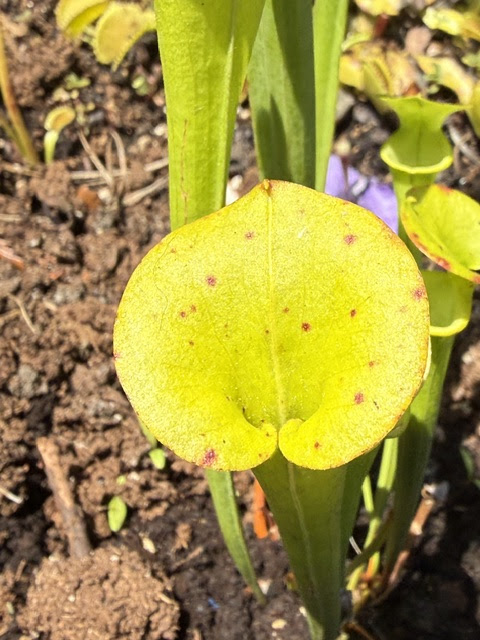
Pitcher plant!
Carnivorous plants thrive in the Francis Marion National Forest thanks to its wet, nutrient‑poor soils and fire‑maintained longleaf pine ecosystems. In habitats like pine savannas, roadside wetlands, and Carolina bays, plants have evolved to “supplement” their nutrition by trapping insects rather than relying solely on the nutrient‑limited soil. The forest is home to roughly a dozen carnivorous plant species, including several pitcher plants in the genus Sarracenia, which use tube‑shaped leaves filled with digestive fluids to capture and break down insects. One of the most common is the hooded pitcher plant (Sarracenia minor), along with regional species such as the yellow pitcher plant (Sarracenia flava), both well adapted to the sunny, open savanna conditions maintained by frequent fire.
Alongside pitcher plants, the forest hosts smaller but equally fascinating carnivores such as sundews (Drosera species) and bladderworts (Utricularia species). Sundews trap insects with sticky, glistening hairs that slowly curl around their prey, while bladderworts, found in wetter or fully submerged habitats, use tiny vacuum‑like bladders to suck in microscopic organisms. These species are especially common in Carolina bay wetlands and open boggy areas where fire and seasonal flooding prevent woody vegetation from taking over. Together, these carnivorous plants form a distinctive part of Francis Marion’s biodiversity, showcasing how life adapts to some of the most nutrient‑limited yet ecologically rich habitats in South Carolina.