
Fond of the Frond!
If you’ve ever seen the South Carolina state flag, you’ve already met the cabbage palmetto. The cabbage palmetto (Sabal palmetto) thrives along the southeastern coast of the U.S., especially in salty, sandy soils where other trees might struggle. These palms are incredibly wind-resistant, which is why you’ll usually still see them standing after coastal storms roll through.
Fun twist: botanically, it’s not technically a “tree” in the traditional sense. Palmettos are monocots, meaning they don’t form growth rings or true wood like oaks or pines. Instead, their trunks are made of densely packed fibers that help them bend without breaking in high winds. The “cabbage” part of its name comes from the edible heart at the top of the tree, sometimes called “swamp cabbage.” Historically, it was used as a food source, though harvesting it kills the tree, so it’s not often harvested today.
The palmetto also has deep Revolutionary War roots. During the 1776 Battle of Sullivan’s Island, a fort built from palmetto logs absorbed British cannon fire instead of splintering. That unexpected toughness helped protect Charleston and cemented the palmetto as a lasting state symbol.
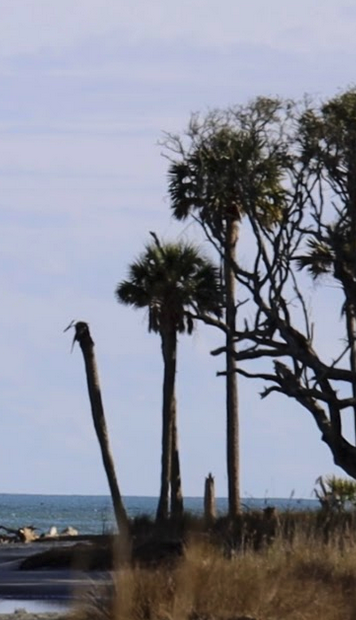
Cabbage Palm in the washout area of Capers!