
HABs
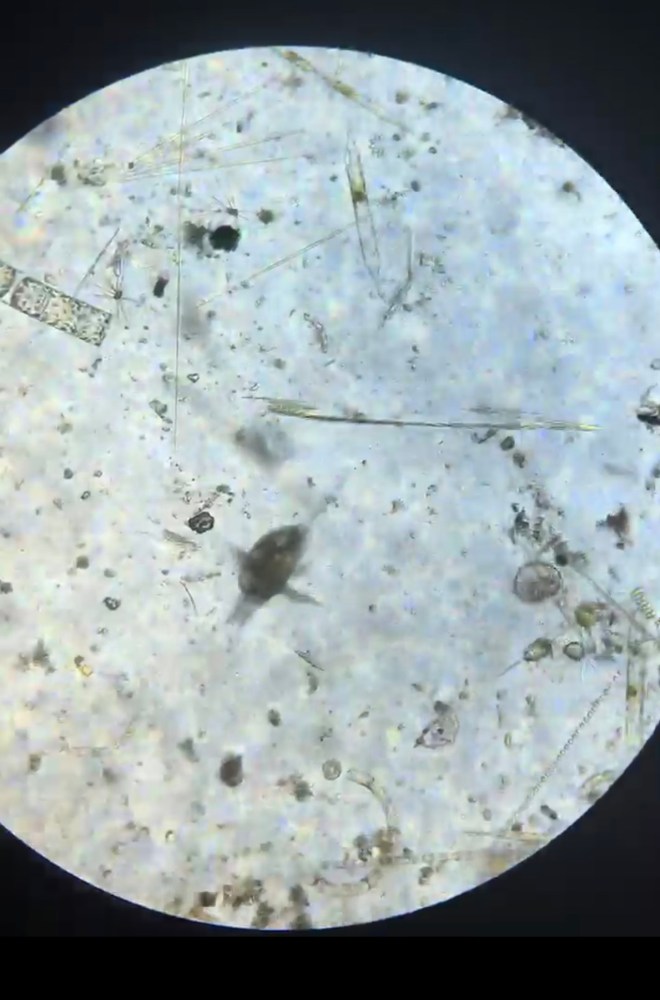
Plankton under a microscope (non-toxic!).
Plankton may be microscopic, but they play a massive role in keeping our oceans and waterways healthy. There are two main types of plankton: phytoplankton and zooplankton. We mentioned plankton in this blog post if you’d like to read more! Phytoplankton are plant-like organisms that use sunlight to make their own food through photosynthesis, while zooplankton are tiny animals that feed on other plankton. You can find plankton in oceans, estuaries, freshwater rivers, and lakes, essentially any body of water. Phytoplankton form the base of the aquatic food web and produce much of the oxygen we breathe (it is estimated that between 50-80% of the world’s oxygen produced from phytoplankton!). Zooplankton’s job is to provide a critical food source for fish, shellfish, and other marine life.
Certain species of phytoplankton grow rapidly, produce toxins, and form what are known as harmful algal blooms (HABs). Colloquially they are often called “Red Tides”. HABs occur in marine and freshwater environments worldwide, including along U.S. coastlines. They often develop when conditions such as warm water temperatures, excess nutrients (like nitrogen and phosphorus from runoff), and calm water create the perfect environment for rapid growth. HABs produce toxins that can harm fish, marine mammals, birds, and even humans. They can contaminate seafood, cause respiratory irritation, upset human stomachs, damage local fisheries by creating huge fish kills, and disrupt entire ecosystems.
A powerful tool to prevent HABs is through plankton monitoring. Citizen science programs like the NOAA Phytoplankton Monitoring Network train volunteers to collect water samples and identify plankton species. Monitoring helps scientists detect early signs of HABs, protect public health, and better understand changing environmental conditions. By reducing nutrient runoff, supporting clean water initiatives, and participating in monitoring efforts, we can be proactive about our waterway protection.