Murky or dirty?
If you’ve ever looked out at the water around Charleston and wondered why it’s brown or murky instead of clear blue, don’t worry, it’s not dirty. Our coastal waters are naturally “turbid,” meaning they contain lots of life and movement. Phytoplankton and zooplankton (tiny drifting organisms at the base of the marine food web), along with detritus (decaying plant and animal material) and fine sediment from rivers and tides, all contribute to the water’s color. The Ashley, Cooper, and Wando Rivers constantly stir and deliver sediment into the harbor, creating the tea-colored water that’s characteristic of Lowcountry estuaries, and incredibly productive for wildlife.

Secchi Disk!
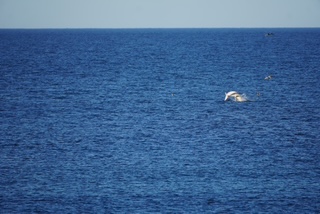
During the winter months, the water often looks clearer because many plankton species become dormant as temperatures drop, increasing visibility. Scientists measure this clarity using a simple but effective tool called a Secchi disk. The disk is black and white and attached to a rope marked with measured intervals. To test turbidity, the disk is slowly lowered into the water until it disappears from view; the depth at which it vanishes tells scientists how clear, or cloudy, the water is. Offshore, Charleston’s water shifts to a deep blue and crisp clarity because it’s farther from river input and sediment, deeper, and influenced by open-ocean currents that carry fewer particles and less organic matter. Fewer suspended materials mean more light penetration, giving offshore waters that bright blue color, while our murky inshore waters remain a sign of a thriving, nutrient-rich coastal ecosystem.