
Prickly Pear Cactus!
Here in the Southeast, one species you may encounter is the eastern prickly pear (Opuntia humifusa), a native cactus surprisingly well adapted to life along the coast. It can be found among maritime forests and in transition zones between the marsh and forest. Its low, spreading pads help it thrive in dry, sunny habitats, while its bright yellow flowers attract insect pollinators. After flowering, those blooms develop into fleshy fruits that can persist for months. These fruits are called “tunas”, and no, they don’t taste anything like the fish!
Though prickly pear does, in fact, have spines, it is an important little piece of the coastal food web. Birds and mammals eat the fruits and help disperse the seeds, while animals such as deer, rabbits, and gopher tortoises may feed on the pads or fruits. The dense, spiny pads can also provide shelter for smaller animals, including birds, reptiles, and other wildlife seeking protection from predators and the sun. On a barrier island, this tough little cactus is more than just a quirky plant, it’s part of the larger coastal community, providing food, cover, and habitat in a landscape where surviving the heat, sand, and salt takes some serious adaptation.
Prickly pear cactuses are edible for humans, too! The pads can be eaten once the spines and tiny hair-like spines are carefully removed. The edible pads are known as “nopales” and are commonly used in Mexican cuisine, with a flavor often compared to green beans or green peppers. The tunas can also be eaten and are used to make everything from jellies and candies to beverages and prickly pear-flavored cocktails.
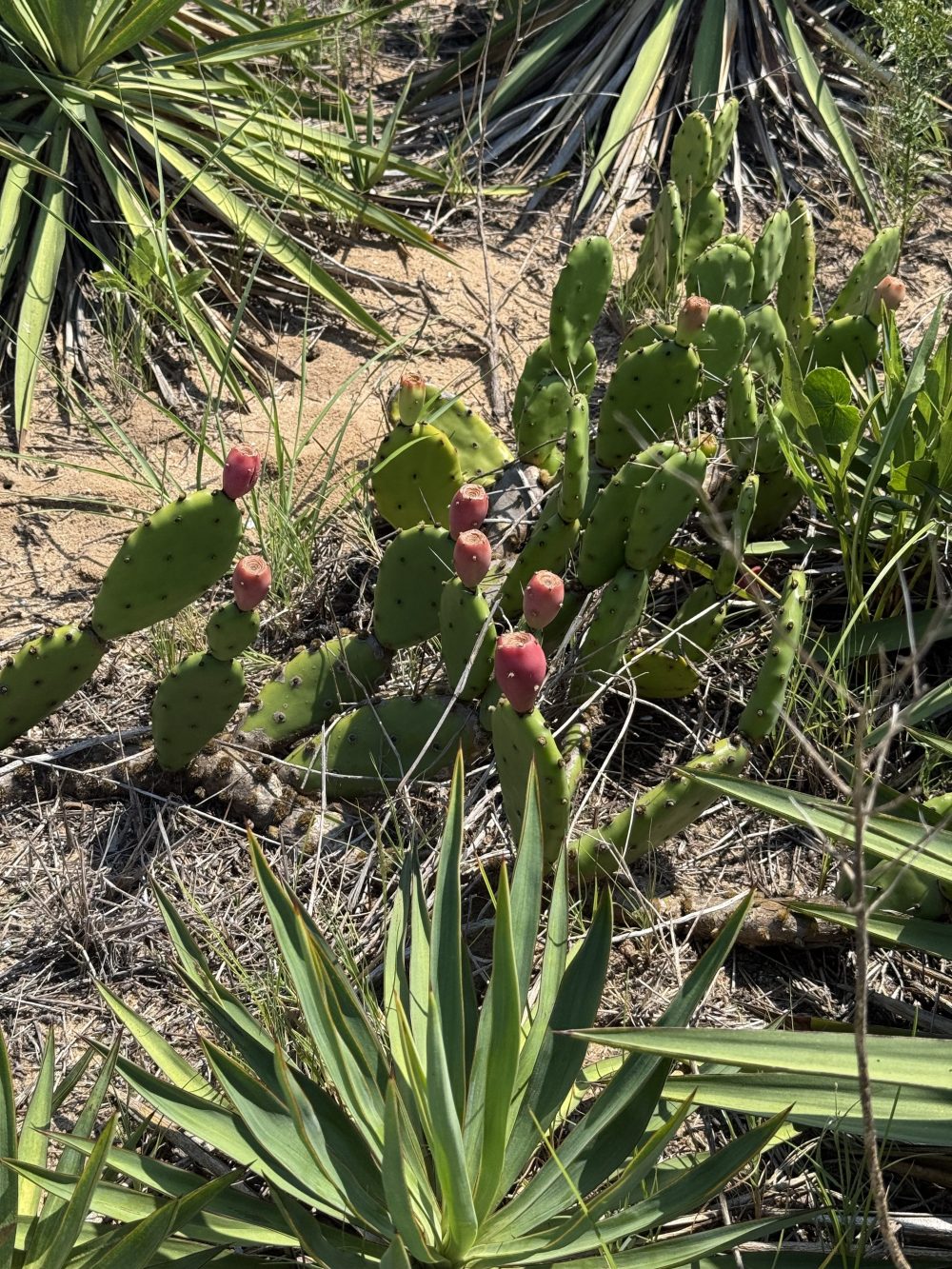
Prickly pear cactus with ripe tunas–surrounded by Spanish bayonet!