
Salty or sweet?
Did you know that the amount of salt in water can completely change what lives in it?
Sweetwater aka Freshwater has less than 0.5 parts per thousand (ppt) of salt and supports plants like cattails, water lilies, cypress trees, and freshwater grasses that would shrivel in salty conditions (way up the Cooper River where you start to see cattails!). Brackish water is the in-between zone, usually 0.5-30 ppt, found in estuaries where rivers meet the sea (think Charleston Harbor!). Here you get salt-tolerant plants like mangroves, cordgrass, and marsh grasses that can handle changing tides and salinity levels. Saltwater, like the open ocean (or the Isle of Palms Marina!), is anywhere from 30-40 ppt and is home to seagrasses, kelp forests, and salt-marsh plants that are specially adapted to keep salt from dehydrating their tissues. Each jump in salinity acts like an environmental filter, allowing only the toughest, most specialized vegetation to thrive.
There are some hypersaline waters, which are saltier than the ocean (typically above 40 ppt). The Laguna Madre in Texas is one of the few hypersaline lagoons in the world, where evaporation pushes salinity extremely high and only very hardy seagrasses and microorganisms can survive. The Red Sea is another famous example, with salinity often around 40+ ppt thanks to intense heat, high evaporation, and very little freshwater input. In these environments, plant life is limited and highly specialized, but microbial life can be wild, including salt-loving organisms that give some waters reddish or pinkish hues.
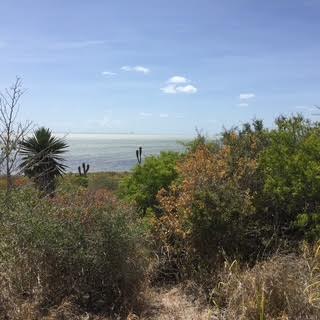
Laguna Madre, Texas