
The good, the bad, and the snags!
Snags are standing dead or dying trees that remain upright in forests, wetlands, and coastal ecosystems. Even though they are no longer living, they play a super important role in habitat structure. As a tree dies, its wood softens and begins to decay, making it easier for animals to carve into or nest within. Snags can vary in size and stage of decay, which actually increases their ecological value because different species prefer different conditions. For example some species prefer freshly dead trees with firm wood, while others rely on older, hollowed-out snags. One example of a species that prefers freshly dead pine trees is the scarlet king snake and native bees will prefer dried out beetle cavity filled older snags.
These trees provide critical shelter and nesting sites for a wide variety of animals. Birds like woodpeckers excavate cavities in snags, and those holes are later used by other species such as owls, small songbirds, bats, and even some reptiles and amphibians. Mammals like squirrels and raccoons may also den inside them. Insects are attracted to decaying wood, which in turn provides a food source for insect-eating animals. Snags support entire mini-ecosystems and offering animals homes, protection from predators, and places to raise young, or even as a perch for resting, lookout tower, and more! Just in the southeastern united states there are about 60 species of birds, mammals, reptiles, and amphibians who all utilize snags as habitats! For further reading on snags, check out this page from SCDNR.
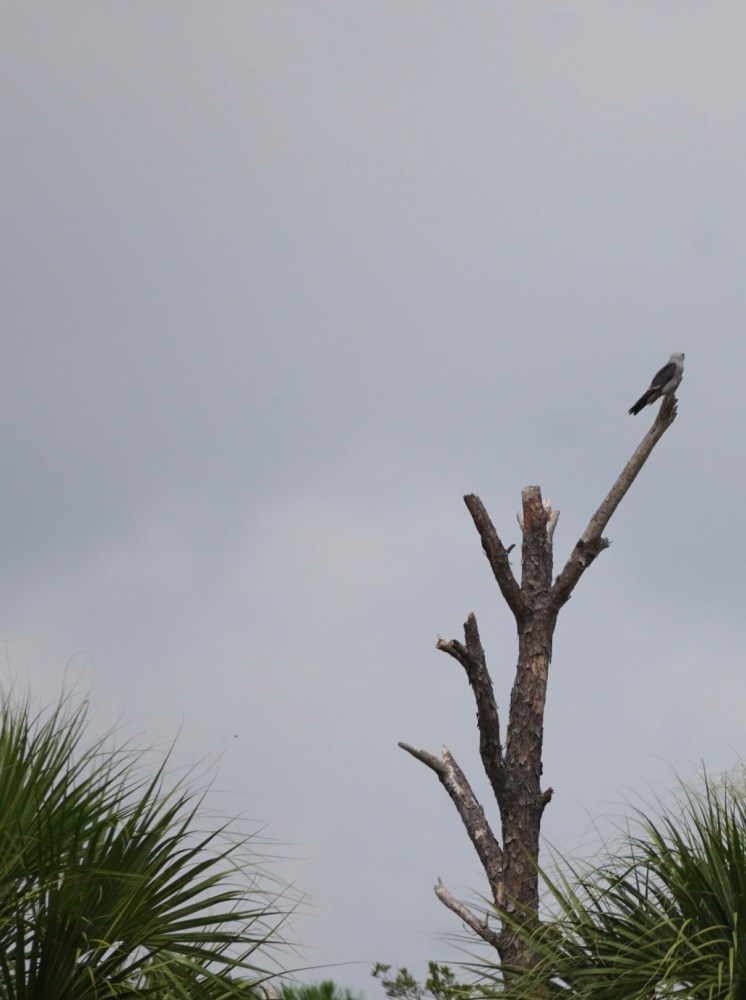
Mississippi Kite on the lookout!