
Cypress Trees!
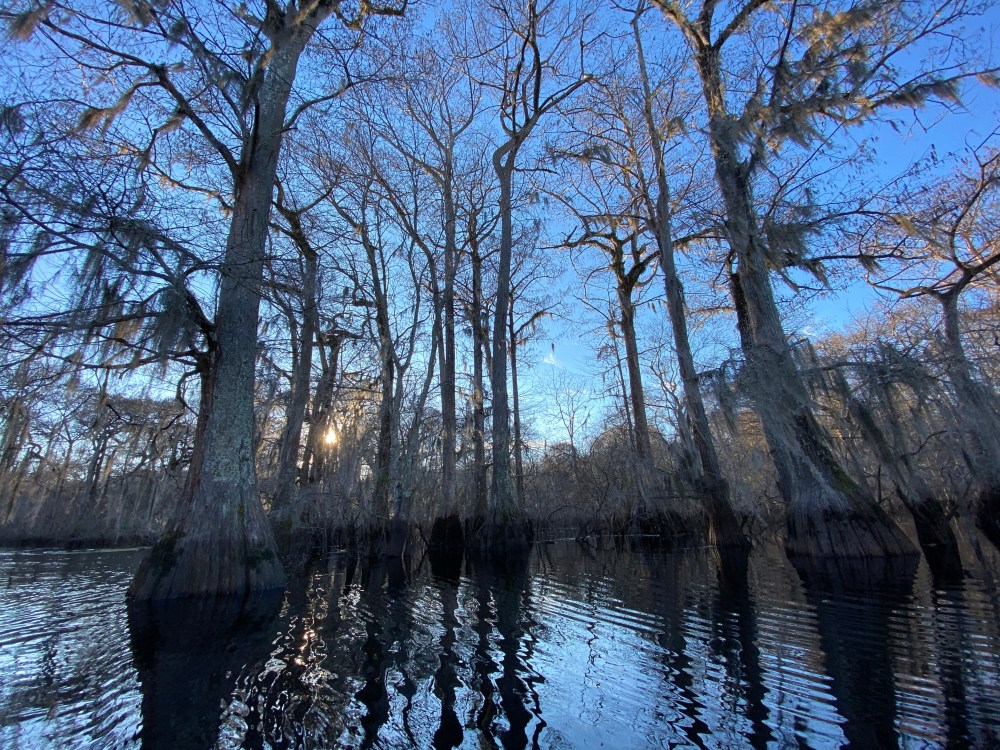
Cypress trees, Spanish moss, and a swamp sunset!
South Carolina’s swamps are home to the bald cypress (Taxodium distichum), a deciduous conifer well adapted to life in flooded forests and waterlogged soils. These impressive trees can reach 100–150 feet tall in the wild, with broad, buttressed trunks and distinctive root structures called cypress knees that project above the water or soil. Although their exact function is still debated, these knees are one of the most recognizable features of a cypress swamp! Bald cypress trees can live for centuries, and some of South Carolina’s oldest are more than 1,000 years old. Their durable, rot-resistant wood has also made them historically valuable, contributing to the loss of many old-growth cypress forests through logging.
If you want to experience these remarkable trees in person, South Carolina has several beautiful places to explore. Francis Beidler Forest in Harleyville protects an ancient cypress-tupelo swamp, with a boardwalk winding through the forest and trees estimated to be more than 1,000 years old. Closer to the Charleston area, Cypress Gardens in Moncks Corner offers a chance to see cypress trees rising from a blackwater swamp by boat. Further inland, Congaree National Park near Hopkins protects an old-growth floodplain forest where bald cypress grow alongside tupelo and other towering hardwoods. You can also explore cypress-filled waterways at Sparkleberry Swamp near Lake Marion. Each location offers a glimpse into these unique wetland ecosystems, where ancient trees provide habitat for wildlife and help sustain the natural processes that make South Carolina’s swamps so special.