
Jingle Shells Rock!
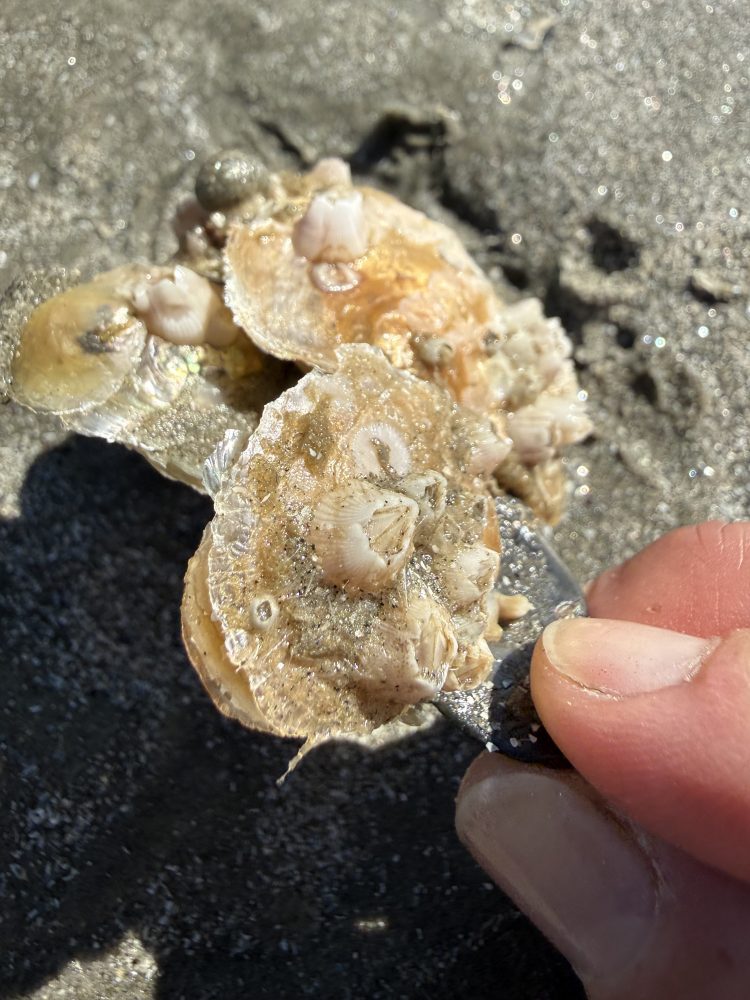
Jingle shell attached to an oyster with barnacles and small anemones attached!
Jingle shells are bivalves that protect their soft internal bodies using two distinct shells. As juveniles these animals will float freely as plankton and once they find hard surfaces like rocks, oyster shells, pilings, etc. they attach themselves using strong, threadlike structures called byssal threads. These threads pass directly through a hole in the lower valve of the shell. Because this lower valve is thinner and far more fragile than the upper one, it breaks apart easily, which is why beachgoers are much more likely to find individual upper valves washed up on the shore rather than a full pair!
More than just a shiny, fun shell to find, jingles have an important niche to fill! Throughout their life cycle, jingle shells act as filter feeders that clean the water and serve as an important food source, or prey, for predators like crabs and fish. Their shells provide essential physical habitats for other small organisms to colonize, and once they die, their breakdown adds valuable nutrients back into the ecosystem and contributes to coastal shell accumulations.