
Literally or Littorally
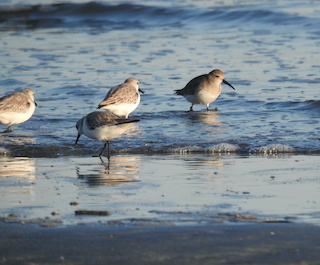
Dunlin to the right of sandpipers wading through the Littoral Zone (aka Intertidal Zone)
One of the most productive and dynamic areas of the ocean is the littoral zone, a transitional habitat where land and water meet. Also known as the intertidal zone (around tidally influenced areas), this area is constantly shaped by the rise and fall of the tides. Think “Inter” as in the in between high tide and low tide marks, usually indicated by wet sand. Organisms that live here must be able to withstand changing conditions, including exposure to air, shifting sands, crashing waves, and fluctuating temperatures. Despite these challenges, the littoral zone supports a remarkable diversity of life and serves as an important link between terrestrial and marine ecosystems.
Many invertebrates thrive in the littoral zone, including mole crabs, ghost shrimp, and coquina clams that burrow into the sand and emerge as tides change. These small animals play a vital role in the coastal food web, recycling nutrients and providing food for larger predators. Shorebirds such as red knots and willets can often be seen foraging along the water’s edge, probing the sand for these hidden prey items. Whether you’re watching birds search for a meal or spotting tiny clams retreating beneath the sand, the littoral zone supports a highly diverse community of organisms and plays a critical role in coastal food webs.